

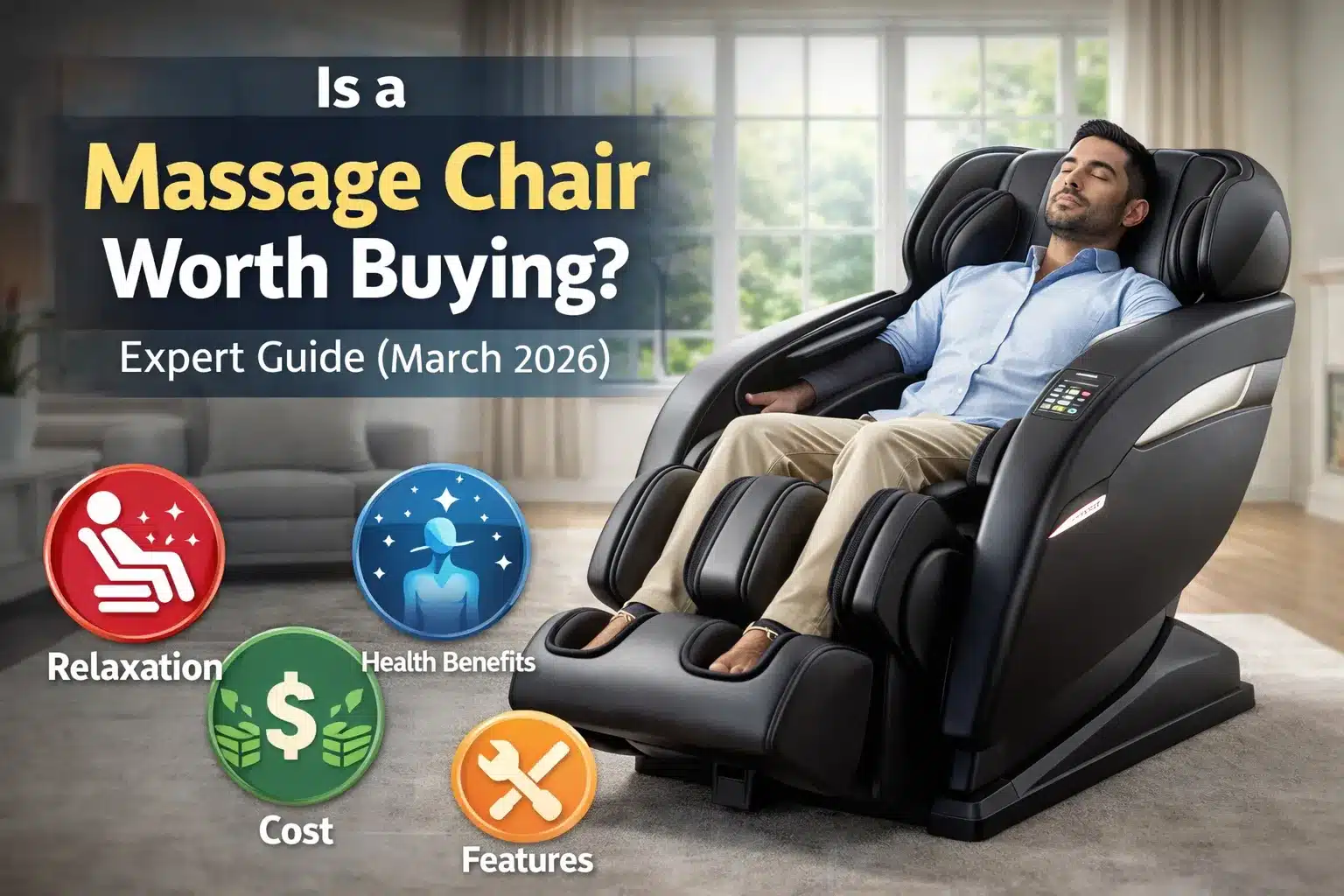
Updated March 2026 • By Wellness Equipment Experts • 20 min read • Medically reviewed for accuracy
| Quick Answer: For most people who would use it regularly — especially those currently paying for professional massage therapy, chiropractic visits, or physiotherapy — a massage chair is absolutely worth buying. The financial break-even point typically falls between 12 and 36 months, after which every session costs you virtually nothing. Beyond the economics, the health benefits of consistent daily massage therapy are clinically supported and genuinely life-improving. The full answer, however, depends on your specific usage patterns, budget, health needs, and available space — all of which this guide covers in depth. |
The massage chair sits in an interesting space in the consumer wellness market — simultaneously dismissed as an indulgent luxury and championed as one of the smartest long-term health investments a household can make. The truth, as with most things, is more nuanced than either extreme.
Modern massage chairs have evolved dramatically from the coin-operated relics of shopping mall food courts.
Today’s home massage chairs are sophisticated biomedical devices engineered with body-scanning technology, 4D robotic roller systems, zero-gravity positioning, air compression therapy, heat therapy, and AI-powered customization.
They are capable of delivering therapeutic experiences that rival — and in certain measurable ways surpass — what a professional massage therapist can provide on a consistent daily basis.
But they also cost $1,500 to $11,000, weigh 150 to 300 pounds, require dedicated floor space, and are only valuable if you actually use them. This guide gives you the complete, honest, evidence-based answer to the question every prospective buyer is really asking: Is a massage chair worth buying for me, specifically?
The Verdict at a Glance
| Value for Money (regular users) | ▓▓▓▓▓▓▓▓▓░ | 9 / 10 |
| Health & Therapeutic Benefits | ▓▓▓▓▓▓▓▓▓░ | 9 / 10 |
| Convenience & On-Demand Access | ▓▓▓▓▓▓▓▓▓▓ | 10 / 10 |
| Financial ROI vs. Spa Massage | ▓▓▓▓▓▓▓▓░░ | 8 / 10 |
| Build & Feature Quality (premium) | ▓▓▓▓▓▓▓▓▓░ | 9 / 10 |
| Space & Practicality | ▓▓▓▓▓▓░░░░ | 6 / 10 |
| Value for Occasional Users | ▓▓▓▓░░░░░░ | 4 / 10 |
| Overall Worth Buying Score | ▓▓▓▓▓▓▓▓░░ | 8 / 10 |
The Financial Case: Cost vs. Professional Therapy Over Time
The most compelling argument for buying a massage chair is financial — and the numbers are striking once laid out across a multi-year horizon.
Professional massage therapy, chiropractic care, and physiotherapy are recurring costs that never stop accumulating.
A massage chair is a one-time investment that continues delivering value for 10 to 15 years.
What Professional Massage Therapy Costs
A licensed massage therapist typically charges $80 to $150 per session, depending on location, session length, and specialty.
When you account for gratuity (typically 15–20%), travel time, and the occasional missed session fee, the realistic all-in cost per session is $95 to $175.
At a conservative $120 per session with weekly frequency, annual massage therapy expenditure reaches $6,240.
Over five years, that is $31,200 in recurring costs — with nothing to show for it except the sessions already experienced.
Chiropractic care presents a similar pattern. Co-pays for specialist visits typically run $40 to $75 per visit, with chronic pain patients often attending two to four sessions per month.
At $65 per visit twice monthly, annual chiropractic costs reach $1,560 — and many patients maintain this cadence for years without achieving lasting relief from the underlying condition.
| Scenario | Year 1 | Year 3 | Year 5 | Year 10 |
| Spa massage (weekly @ $120) | $6,240 | $18,720 | $31,200 | $62,400 |
| Spa massage (biweekly @ $120) | $3,120 | $9,360 | $15,600 | $31,200 |
| Chiropractor (weekly @ $65) | $3,380 | $10,140 | $16,900 | $33,800 |
| Mid-range chair ($3,500, daily use) | $3,500* | $3,500* | $3,500* | $3,500* |
| Premium chair ($7,000, daily use) | $7,000* | $7,000* | $7,000* | $7,000* |
* One-time purchase cost. No recurring fees. Electricity cost is negligible (~$0.05–0.15 per session).
The financial break-even analysis makes the investment clear. A mid-range massage chair at $3,500 pays for itself in under 30 weeks of replaced weekly spa sessions at $120.
A premium $7,000 chair pays for itself in under 58 weeks — just over one year — if it replaces weekly professional massage therapy. After break-even, every session for the remaining 9 to 14 years of the chair’s life is economically free.
| For households with two or more regular users, the financial case strengthens considerably. A single massage chair serving two people daily effectively halves the cost per session from day one — making the break-even point even faster and the lifetime ROI even more compelling. |
The Health Benefits: What the Evidence Actually Shows

A common misconception is that massage chairs are primarily relaxation devices — pleasant but medically inconsequential. The clinical evidence tells a different story.
Decades of research into massage therapy’s physiological effects have produced a robust body of evidence, and modern massage chairs are engineered to replicate the specific techniques that this research validates.
1. Stress Reduction and Cortisol Management
Regular massage therapy produces measurable reductions in cortisol — the body’s primary stress hormone — and corresponding increases in serotonin and dopamine.
These neurochemical shifts are not trivial: chronically elevated cortisol is associated with impaired immune function, disrupted sleep, weight gain, cardiovascular stress, and accelerated cognitive aging.
The ability to reduce cortisol on a daily basis through a 15–20 minute massage chair session has implications that extend well beyond simple relaxation.
A key distinction here is consistency. The cortisol-lowering effects of massage are cumulative and most pronounced in regular users who maintain a daily or near-daily routine.
A monthly spa massage produces a temporary reset; a daily massage chair session maintains a baseline hormonal environment that fundamentally changes how the body handles chronic stress.
2. Chronic Back and Neck Pain Relief
Back pain is the leading cause of disability globally, affecting an estimated 619 million people. Clinical trials have consistently demonstrated that massage therapy reduces pain intensity and improves functional mobility in individuals with chronic lower back pain, neck pain, and shoulder tension. Massage chairs replicate the shiatsu, kneading, and compression techniques validated in these studies with the added advantage of unlimited session frequency.
Zero-gravity positioning — a standard feature on mid-range and premium massage chairs — distributes the user’s body weight evenly across the chair, reducing compressive forces on the lumbar discs to near-zero.
This position achieves a level of spinal decompression that is difficult to replicate through any other means short of clinical traction therapy. For individuals with disc herniations, lumbar stenosis, or chronic low back compression, this feature alone can justify the investment.
3. Improved Blood Circulation
The mechanical actions of massage chair rollers — kneading, tapping, rolling, and compression — stimulate blood flow in the tissues they contact. Improved circulation accelerates the delivery of oxygen and nutrients to muscle tissue, supports faster removal of metabolic waste products like lactic acid, and promotes the kind of tissue repair that is the foundation of post-exercise recovery.
For individuals with sedentary occupations — desk workers, drivers, remote employees — who spend six to ten hours daily in a seated position, the circulation benefits of regular massage chair use partially counteract the vascular effects of prolonged sitting.
Air compression leg programs, a feature of most mid-range and premium chairs, specifically target venous return from the lower extremities, reducing the edema and heaviness that accumulates after long sedentary periods.
4. Sleep Quality Enhancement
The relationship between massage and sleep quality is one of the most consistently documented in the therapeutic research literature.
Massage therapy reduces the time to sleep onset, increases slow-wave sleep duration, and reduces nighttime awakening frequency — effects that are attributed to both the cortisol reduction and serotonin elevation that regular massage produces.
Incorporating a 15–20 minute massage chair session into an evening routine creates a physiological wind-down signal: body temperature decreases (as it does naturally before sleep), muscle tension releases, and the parasympathetic nervous system assumes dominance over the sympathetic “fight or flight” state that often persists long after the workday ends. For the estimated 30–40% of adults who report difficulty sleeping, this routine can produce meaningful, lasting improvements.
5. Post-Exercise Muscle Recovery
Athletes and regular exercisers represent one of the highest-value user groups for massage chair ownership. Post-workout massage reduces delayed onset muscle soreness (DOMS) by accelerating the clearance of inflammatory cytokines and metabolic byproducts from fatigued muscle tissue. It also addresses the myofascial adhesions and trigger points that develop from repetitive training loads and that, if left untreated, become chronic sources of restriction and injury risk.
For athletes training four to seven days per week, access to a daily post-workout recovery massage without the cost or scheduling constraint of a human therapist is a transformative practical advantage. The ability to session immediately after training — when tissue is most receptive to mechanical intervention — is something no appointment-based therapy model can match.
6. Posture Correction Support
Modern desk work creates a specific pattern of muscular imbalance: shortened, overactive chest and anterior shoulder muscles combined with lengthened, underactive upper back and posterior shoulder muscles. This pattern produces the forward head, rounded shoulder posture associated with cervical pain, thoracic restriction, and chronic upper back tension.
Massage chairs that target the trapezius, rhomboids, and erector spinae muscles — along with programs specifically designed for the cervical and thoracic spine — progressively reduce the tension in the muscles that pull posture into dysfunction. Regular use does not replace targeted postural rehabilitation, but it meaningfully reduces the daily accumulation of postural tension that makes correction difficult.
What Technology Makes Modern Massage Chairs Worth the Price?
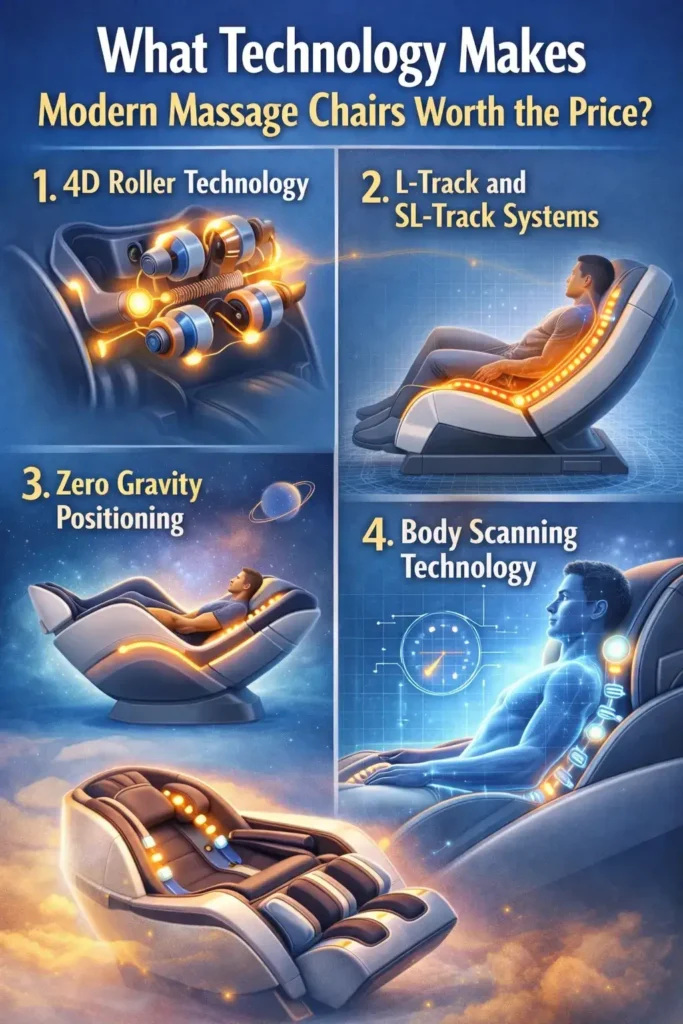
Part of the reason massage chairs have such strong value propositions today — compared to even five years ago — is the genuine advancement in the technology they incorporate. Understanding what these features do, and why they matter, helps calibrate your investment against the specific benefits you are seeking.
| Feature | Budget ($500–$1,500) | Mid-Range ($1,500–$4,000) | Premium ($4,000–$8,000) | Luxury ($8,000+) |
| Roller Type | 2D (fixed plane) | 3D (depth adjustable) | 4D (speed + depth) | 4D AI-adaptive |
| Track Type | S-track | L-track | SL/dual track | Dual full-body |
| Zero Gravity | No / Basic | Yes (1–2 stages) | Yes (2–3 stages) | Yes (full inversion) |
| Body Scanning | No | Basic | Advanced | AI biometric scan |
| Air Compression | Limited | Full body | Full body + intensity | Multi-zone precision |
| Heat Therapy | Lumbar only / none | Lumbar + feet | Back + feet + calves | Full body thermal |
| Foot Rollers | No | Basic reflexology | Advanced reflexology | Heated + adjustable |
| Customization | Preset only | Adjustable zones | Full custom programming | AI personal profiles |
| Typical Lifespan | 3–5 years | 7–10 years | 10–15 years | 12–15+ years |
4D Roller Technology
2D rollers move in a fixed vertical and horizontal plane. 3D rollers add depth — the ability to protrude further into muscle tissue for deeper pressure.
4D rollers add dynamic speed variation within each movement cycle, creating a rhythm and variation that closely mimics the feel of human hands.
The difference is palpable: a 4D massage session feels organic and responsive; a 2D session feels mechanical and repetitive. For serious therapeutic users, 4D is the meaningful minimum worth investing in.
L-Track and SL-Track Systems
Early massage chairs used S-track rail systems that followed the natural S-curve of the spine — stopping at the lumbar region.
L-track systems extend the roller path through the lumbar spine and beneath the seat to the glutes and upper hamstrings.
This is not a minor addition: the gluteal muscles and the posterior hip complex are among the most chronically tight tissue groups in the modern sedentary population, and they are entirely inaccessible to S-track chairs.
SL-track systems combine both designs for comprehensive coverage from the cervical spine to the hamstrings.
Zero Gravity Positioning
Originally developed by NASA to distribute astronauts’ body weight evenly during launch, zero-gravity positioning in massage chairs reclines the user until the legs are elevated above the heart.
This posture achieves three simultaneous benefits: it removes compressive load from the lumbar spine, facilitates venous blood return from the lower extremities to the heart, and allows the chair’s rollers to apply pressure more deeply into back tissue because the user’s body weight is pressing into the chair rather than away from it.
Body Scanning Technology
A massage chair that applies the same pressure at the same points regardless of the user’s height, shoulder width, or spinal curvature is a chair that will work well for some body types and poorly for others.
Body scanning technology — standard in mid-range and premium chairs — uses sensors to map the user’s specific anatomical measurements before each session, then calibrates roller position, pressure distribution, and program emphasis accordingly.
For multi-user households, this means every family member receives a properly fitted massage rather than a one-size-fits-all approximation.
Honest Pros and Cons of Buying a Massage Chair
| ✅ Reasons to Buy | ❌ Reasons to Pause |
| Unlimited on-demand access — 24/7, no appointments needed | Significant upfront cost ($1,500–$11,000) |
| Significant long-term cost savings vs. professional therapy | Large footprint — requires dedicated floor space |
| Clinically supported health benefits with daily use | Heavy (150–300 lbs) — difficult to relocate |
| Multiple household members benefit from one investment | Requires a power outlet with nearby dedicated access |
| Eliminates travel time and scheduling friction | Cannot match a skilled therapist for complex injury rehab |
| Consistent daily sessions produce cumulative health gains | Learning curve for advanced settings and programs |
| No tipping, no awkward small talk, complete privacy | Low-use owners get poor value — discipline required |
| Zero-gravity decompresses the spine without clinical visits | Budget models feel mechanical and lose novelty quickly |
| Post-workout recovery is available immediately after training | Requires periodic maintenance (rollers, upholstery) |
| Can reduce reliance on pain medication for chronic pain | Not suitable for all medical conditions without clearance |
| Proven cortisol reduction and sleep quality improvements | Resale value depreciates significantly after purchase |
| Premium models last 10–15+ years with minimal maintenance |
Who Should Buy a Massage Chair? (And Who Should Not)
| User Profile | Worth Buying? | Reason |
| Regular spa/massage-goer (weekly) | Strongly yes | Financial break-even in under 1 year |
| Chronic back / neck pain sufferer | Strongly yes | Daily therapeutic access without co-pays |
| Athlete / fitness enthusiast | Yes | Daily recovery, reduced DOMS, injury prevention |
| Desk worker (6+ hrs/day) | Yes | Postural relief, cortisol management, circulation |
| Household with 2+ regular users | Strongly yes | Per-session cost halves; ROI doubles |
| Poor sleeper / high stress | Yes | Proven sleep and cortisol benefits from daily use |
| Occasional user (< 2x/month) | Probably not | Won’t generate enough value to justify cost |
| Small space / studio apartment | Consider carefully | Space requirements are significant |
| Budget under $1,000 | Entry-level only | Manage expectations; features are limited |
| Requires specific clinical rehab | Consult a physio | Chair supplements but cannot replace targeted therapy |
Which Price Tier Is Right for You?
Budget Tier: $500 – $1,500
Budget massage chairs provide the basic mechanics of home massage — S-track rollers, simple kneading and vibration programs, and a handful of preset modes.
They are suitable for users who primarily want light relaxation and general tension relief, and who are not dependent on the chair for therapeutic health goals.
The limitations are real: 2D rollers feel noticeably mechanical, body scanning is absent, air compression coverage is limited, and these chairs typically have 3–5 year lifespans before performance degrades.
The risk in the budget tier is the novelty effect: the chair feels enjoyable at first, use frequency drops after the initial enthusiasm fades, and the chair joins the collection of underused fitness equipment.
The budget tier is appropriate if you are genuinely uncertain about how often you will use a massage chair and want to test the concept before committing to a larger investment.
Mid-Range Tier: $1,500 – $4,000
The mid-range tier is where genuine therapeutic value begins. 3D rollers provide meaningful depth adjustment, L-track or SL-track systems reach the gluteal region, basic body scanning calibrates the session to your measurements, air compression covers the full body, and zero-gravity positioning is standard. Brands like Kahuna, Human Touch, Osaki, and Infinity occupy this space with models that have strong user review records and 7–10 year lifespans.
For most households — those seeking daily stress relief, back pain management, improved sleep, and post-exercise recovery — the mid-range tier represents the strongest value proposition. The therapeutic features are comprehensive, the build quality is durable, and the price point makes the financial ROI achievable within 2–3 years for regular users.
Premium and Luxury Tier: $4,000 – $11,000+
Premium and luxury massage chairs are sophisticated biomedical devices. 4D roller systems with AI-adaptive speed variation, dual-track rail coverage from the cervical spine to the hamstrings, full-body thermal therapy, advanced biometric body scanning, inversion therapy, heated foot reflexology, and multi-user AI profile management are the defining features of this tier.
These chairs are worth the investment for users with chronic medical conditions — disc herniations, fibromyalgia, neuropathy, post-surgical recovery — where the precision and comprehensiveness of the therapeutic program matters clinically, not just for comfort. They are also appropriate for high-frequency users (once or twice daily), multi-user households where the per-session cost analysis fully amortizes the premium price, and buyers who intend to own the chair for 12+ years.
Notable luxury models include the Ogawa Master Drive Duo, Daiwa Supreme Hybrid, Osaki Solis, and Luraco i9 Max SE — all of which carry manufacturer warranties of 5 years or more and deliver therapeutic experiences that independent reviewers consistently describe as comparable to professional-level massage.
Massage Chair vs. The Alternatives: An Honest Comparison
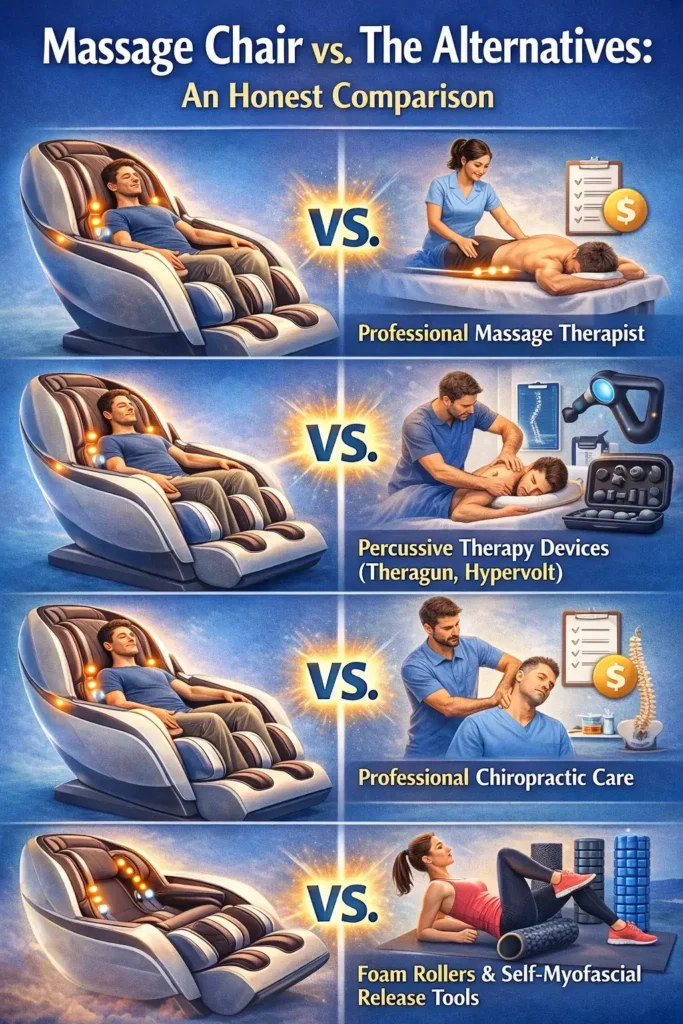
Before committing to a massage chair, it is worth honestly comparing it to the alternatives that compete for the same dollars and the same wellness goals.
- vs. Professional massage therapist: A skilled therapist can adapt to complex injury presentations, communicate with the client in real time, apply clinical-grade pressure with precision, and integrate multiple modalities in a single session. The massage chair cannot fully replicate this nuance — particularly for acute injuries, scar tissue mobilization, or postural rehabilitation requiring manual clinical assessment. However, the chair wins decisively on accessibility, consistency, cost over time, and the cumulative effects of daily (rather than weekly or monthly) use.
- vs. Percussive therapy devices (Theragun, Hypervolt): Handheld percussive devices are excellent for targeted muscle release and post-workout recovery at a much lower price point ($200–$600). They require manual effort, cannot be used on your own back effectively, and do not provide the full-body systemic relaxation, spinal decompression, or circulation benefits of a massage chair. For recovery-focused athletes, a percussive device is a complement to a massage chair — not a replacement.
- vs. Professional chiropractic care: Chiropractic adjustments address specific joint mobility restrictions and vertebral subluxations through manual high-velocity thrusts — something no massage chair replicates. However, massage chairs provide the ongoing soft tissue work that supports chiropractic outcomes by reducing the muscular tension that pulls adjusted joints back into dysfunction. Many chiropractors recommend massage chair use between appointments for exactly this reason.
- vs. Foam rollers and self-myofascial release tools: Self-myofascial release tools cost $20–$150 and deliver meaningful value for specific muscle groups — IT band, thoracic spine, hip flexors. They require active physical effort, cannot reach the mid-back effectively without assistance, and produce none of the systemic neurochemical effects (cortisol reduction, serotonin elevation) associated with passive full-body massage. These tools are excellent for daily maintenance work; they are not substitutes for comprehensive therapeutic massage.
What to Look For When Buying a Massage Chair
If you have decided a massage chair is right for you, these are the specifications and features that separate truly therapeutic machines from those that simply feel good for the first few weeks.
- Track type: L-track or SL-track as the minimum for serious users — S-track chairs that stop at the lumbar spine miss the gluteal muscles entirely, which are among the most critical areas for back pain sufferers and desk workers
- Roller dimension: 3D rollers as the minimum for meaningful therapeutic depth; 4D for the most natural, human-like massage feel
- Body scanning: Non-negotiable for multi-user households and for users who are significantly outside average height/weight ranges
- Zero-gravity stages: At minimum two stages; three or more stages for users with significant lumbar compression issues
- Air compression coverage: Full-body — shoulders, arms, hips, calves, and feet — rather than legs-only designs
- Heat therapy zones: Lumbar heat is minimal; full-back and foot heating for premium value
- Weight capacity: Verify the chair’s specified user weight capacity accommodates all household users
- Warranty: 3-year structural frame minimum; 5+ years for premium purchases; read the parts and labor coverage carefully
- Space and door clearance: Measure your dedicated space and your doorframes — most full-recline chairs require 18–24 inches of clearance behind the backrest to reach full zero-gravity
Trial period and return policy: Reputable dealers offer 30–90 day in-home trials; this is essential given that body response to a specific chair can only be assessed through actual use.
Frequently Asked Questions
How long does a good massage chair last?
Quality mid-range massage chairs from established brands typically last 7 to 10 years with normal household use. Premium models are built to 10 to 15-year lifespans. Budget chairs under $1,000 generally deliver 3 to 5 years before roller mechanisms or electronic components begin to degrade. Longevity is most directly influenced by build quality (motor grade, roller mechanism quality, upholstery durability), usage frequency, and maintenance habits (keeping rollers clean and mechanism lubricated per manufacturer guidelines).1
How often should you use a massage chair?
For general wellness maintenance, 15–20 minute sessions once daily represent the sweet spot for most users. This frequency is sufficient to produce the cumulative cortisol-reduction, sleep improvement, and muscle tension benefits documented in the research literature, while staying well within safe use guidelines. New users should begin with 10–15 minute sessions at moderate intensity and build frequency and duration gradually over the first four to six weeks. For athletes using the chair specifically for post-workout recovery, sessions immediately following training produce the best acute benefits.
Can massage chairs help with herniated discs?
Massage chairs can provide genuine relief for many people with herniated discs — particularly through zero-gravity positioning, which reduces compressive forces on the intervertebral discs, and through the reduction of paraspinal muscle spasm that often exacerbates disc-related pain. However, herniated discs vary significantly in severity and presentation, and some configurations — particularly those with significant nerve compression — may be aggravated by direct roller pressure over the affected spinal level. Medical clearance from a spine specialist or physiotherapist is strongly recommended before regular massage chair use with any diagnosed disc condition.2
Is a massage chair covered by insurance or HSA/FSA?
In the United States, massage chairs are generally not covered by standard health insurance. However, many massage chairs are eligible for purchase with Health Savings Account (HSA) or Flexible Spending Account (FSA) funds when purchased as a qualified medical expense — typically requiring documentation from a physician indicating the chair is recommended for a specific diagnosed condition. Several major massage chair brands, including Sunny Health & Fitness, explicitly advertise HSA/FSA eligibility for their products. Check with your plan administrator and consult your physician about obtaining the necessary documentation if this funding pathway is relevant to you.
What is the best massage chair brand in 2026?
The leading massage chair brands in 2026 include Ogawa, Osaki, Infinity, Human Touch, Kahuna, Daiwa, and Luraco, each with distinct strengths across different price tiers and user needs. Ogawa and Daiwa are widely regarded as best-in-class for premium 4D AI-adaptive systems. Kahuna offers the strongest value in the mid-range tier with consistent review scores and robust build quality. Human Touch is known for ergonomic precision and its collaboration with physical therapists in product design. Luraco manufactures American-made chairs with medical-grade features for clinical and high-therapeutic-demand users.
Yes — and for households with multiple users, the per-session cost economics of ownership are significantly more favorable. The key is ensuring the chair includes body scanning technology that recalibrates settings to each user’s measurements before every session. Without body scanning, a chair calibrated to one user’s anatomy will apply pressure in potentially incorrect positions for a significantly different-sized user, reducing therapeutic effectiveness and potentially increasing the risk of discomfort over bony prominences.
Are cheap massage chairs worth it?
Budget massage chairs under $1,000 can provide value for users who genuinely want light relaxation and general tension relief and who have realistic expectations about the limitations of entry-level features. They are not appropriate for users with chronic pain conditions, significant therapeutic goals, or expectations of a professional-quality massage experience. The risk specific to budget chairs is that the novelty effect leads to declining use after the first few weeks — at which point the chair becomes an expensive piece of furniture. If you are uncertain about how frequently you will use a massage chair, the mid-range tier (with its superior feature set and durability) paradoxically produces better long-term value by sustaining user engagement more effectively than budget models.
The Final Verdict: Is a Massage Chair Worth Buying?
| Yes — for the right buyer. If you currently pay for regular professional massage therapy, chiropractic care, or physiotherapy; if you suffer from chronic back or neck pain; if poor sleep, high stress, or post-exercise recovery are genuine daily concerns; or if your household has two or more regular users — a quality massage chair is one of the most financially sound and therapeutically valuable home wellness investments available in 2026. The financial break-even arrives within 1–3 years for regular users, and the health benefits of daily consistent massage therapy are supported by decades of clinical evidence. The chair then continues delivering value for another 7 to 12 years at virtually no ongoing cost. |
The buyers who do not get good value from massage chairs are those who purchase them hoping they will use them regularly but discover they do not — the same pattern that leaves treadmills as expensive coat racks.
The solution is honest self-assessment before purchase, not avoidance of the category. If you currently visit a massage therapist, chiropractor, or physiotherapist with any regularity, the discipline of use is already demonstrated. A massage chair simply makes that existing habit dramatically more affordable and convenient.
Buy at the mid-range tier as a minimum if you have genuine therapeutic goals. Invest at the premium tier if chronic medical conditions, multi-user household economics, or long-term commitment justify the price. And above all, choose a retailer with a meaningful in-home trial period — because the right chair, for the right body, is a purchase you will be grateful for every single day for the next decade.
Medical Disclaimer: This article is for informational purposes only and does not constitute medical advice. Cost figures are approximate market averages as of March 2026. Always consult a qualified healthcare provider before beginning any new wellness practice, particularly if you have existing health conditions, take prescription medications, or are managing diagnosed musculoskeletal conditions.