
Best Massage Chair for Sciatica – 2026 Reviews
Long stretches of sitting turn into a dull ache in one glute that shoots partway down your leg by evening. A massage chair won’t fix a compressed disc or a pinched nerve root, but the right one can loosen the muscles around the sciatic nerve enough to make evenings more bearable.
The catch: most massage chairs stop working the lower back right around where sciatica actually starts. We compared six SL-track chairs built to reach further — into the glutes and upper hamstrings — on the features that actually matter for sciatic relief, and picked the one worth buying first.
Quick answer: for sciatica-related muscle tension, look for a massage chair with an SL-track that reaches the glutes, zero-gravity recline, adjustable lumbar heat, and a gentle stretch or compression mode — then start at the lowest intensity. Our top pick is the Osaki Titan TP-Epic 4D SL-Track Massage Chair for combining full SL-track coverage, 3-stage zero gravity, and body scanning without moving into premium dual-roller pricing.
Our Best Massage Chairs for Sciatica In 2026

Osaki Titan
TP-Epic 4D SL-Track — Full-Reach Glute & Lower-Back Massage
A full-length SL-track built to reach the glutes and upper hamstrings, not just the lower back, paired with 3-stage zero gravity and an attentive body scan that maps roller placement to your frame before each session.
What Stands Out:
The SL-track runs long enough to actually work the glutes and upper hamstrings, rather than stopping at the lower back — the area where sciatic tension tends to concentrate. The body-scan step reads your shoulder and hip position and calibrates roller placement automatically, which helps keep pressure off an already-irritated area. 3-stage zero gravity spreads your weight evenly across the chair, easing load on the lumbar spine, and the 4D rollers adjust depth and speed independently so you can dial intensity down during a flare without switching programs entirely.
Worth Knowing:
Heat isn’t listed as a feature, so if lumbar warmth is a priority, confirm on the product page or plan to add a heating pad. Like most SL-track chairs, the footprint is larger than an L-track model — measure your recline clearance before ordering.
Bottom Line:
The most complete combination of glute reach, controlled recline, and adjustable intensity on this list, at a price that stays below premium dual-roller chairs.

Titan
Rejūv 4D — Space-Saving SL-Track with Heat
Good for customized lower-back sessions, combining SL-track coverage, built-in heating therapy, and zero gravity in a design that reclines without needing several extra feet of wall clearance.
What Stands Out:
Built with shorter recline clearance in mind, so it suits apartments or rooms where you can’t push the chair away from the wall. Heating therapy is part of the standard program library rather than an add-on, letting you warm the lower back before the rollers get to it. The intelligent health-detection feature reads pulse and posture to adjust roller pressure automatically — a reasonable starting point if you’re not yet sure what intensity feels safe. Voice control means fewer trips to the remote once you’re reclined.
Worth Knowing:
Space-saving recline mechanisms usually trade a little of the deepest zero-gravity angle compared to full-clearance chairs — fine for most people, worth noting if you specifically want the deepest possible recline.
Bottom Line:
The strongest pick here if your room can’t fit a full-size recline chair but you still want lumbar heat and SL-track reach.

Wellness
Hisho SL-Track — Compression + Lumbar Heat
Focused on lower-back and glute coverage, layering full-body compression on top of SL-track roller work, with lumbar heat therapy, a quad-roller mechanism, and calf support.
What Stands Out:
Full-body compression — airbags working shoulders to calves at once — pairs with the SL-track for a two-layer approach: compression for general tension, rollers for targeted glute and lower-back work. The quad-roller mechanism is built to track more precisely along the spine and glutes than single or dual-roller setups. Calf support is a useful extra if sciatic pain radiates down the leg. Seven massage techniques across six preset courses give enough range to start gentle and build up gradually.
Worth Knowing:
With this many programs, expect a short learning curve on the remote or control panel for the first few sessions.
Bottom Line:
A strong pick if you want compression and roller work combined rather than a roller-only massage.

4D Massage Chair
55″ SL-Track Recliner — Core Features, Practical Price
A practical midrange pick with a long 55-inch SL-track, body scan, two zero-gravity positions, a yoga-style stretch, and adjustable air compression.
What Stands Out:
At 55 inches, the track is long enough to comfortably reach the glutes on most body types without paying for the premium multi-sensor packages on pricier chairs. Two zero-gravity positions give some flexibility — a shallower recline for general use, deeper for stretching. Yoga-stretch mode gently pulls at the hips and lower back, which some sciatica sufferers find useful for post-sitting tightness; start gently and stop if it pulls in a way that increases leg pain. Adjustable air compression lets you keep pressure low around a flare-up.
Worth Knowing:
Fewer smart-detection features than the premium picks — no AI health scan — so you’ll select programs and intensity manually rather than having the chair auto-adjust.
Bottom Line:
A sensible pick if you want the core sciatica-relevant features without paying for extras you may not use.

4D Massage Chair
57.1″ SL-Track — 40 Airbags, Lumbar Heat
Offers the longest track on this list, plus lumbar heat, waist airbags, and two zero-gravity positions for a more targeted lower-body routine — useful for taller users.
What Stands Out:
The longest track in this roundup, which matters if you’re on the taller side — a track that runs short can leave the glutes and upper hamstrings undertreated for anyone over about 5’10”. Forty airbags, including a dedicated waist section, add compression around the lower back and hips alongside the roller track, and lumbar heat is built in rather than optional. Foot rollers are a useful extra if standing or walking aggravates leg-side symptoms.
Worth Knowing:
More airbags and a bigger touchscreen generally mean a larger, heavier unit — check delivery access and floor space before ordering.
Bottom Line:
The one to pick if track length is your main constraint — taller users or anyone needing more glute-to-hamstring coverage.
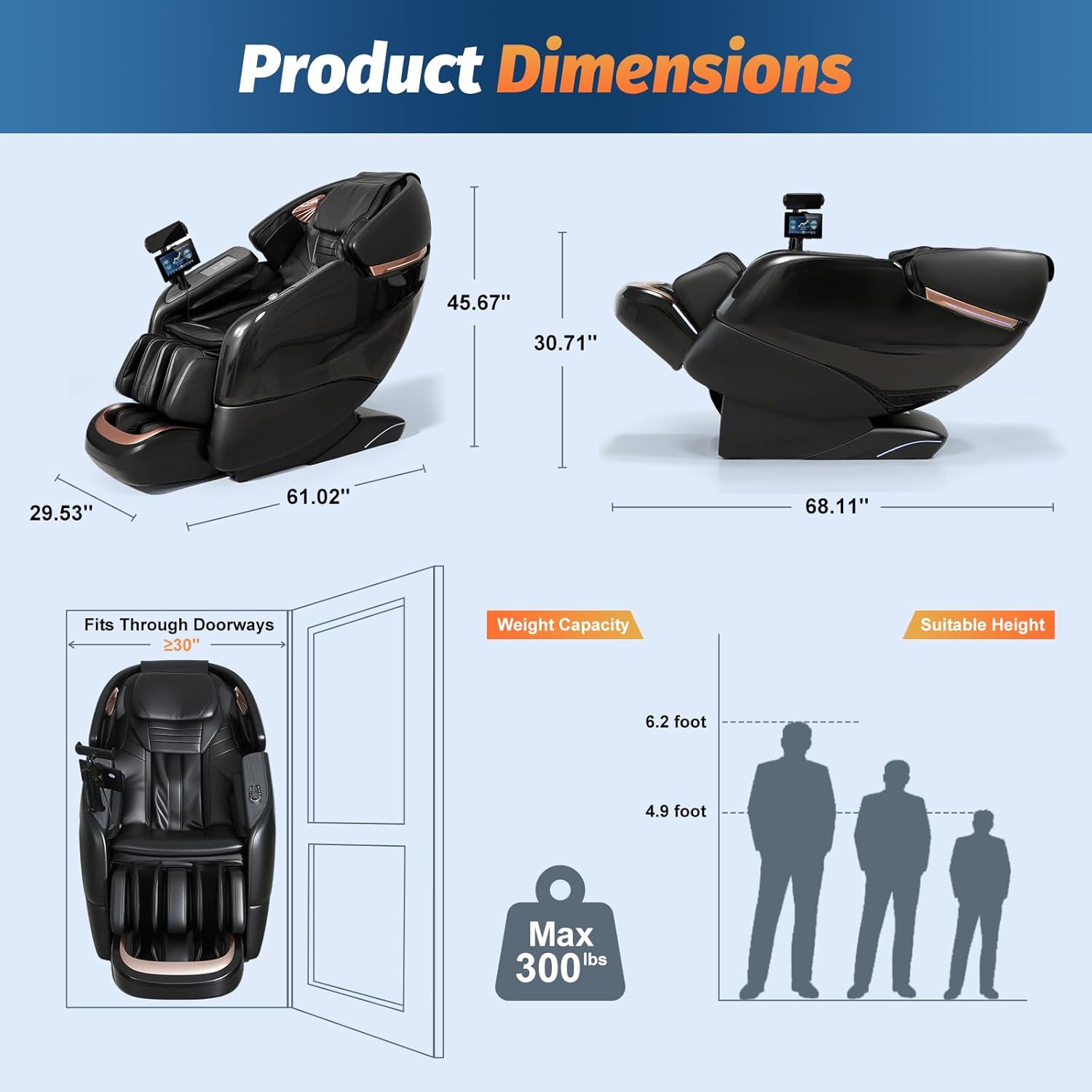
2026 Series
G6 SL-Track (Black) — Waist & Calf Heat
A higher-capacity option with a 52-inch SL-track, lumbar and calf heat, hip airbags, and a Thai-style stretch setting.
What Stands Out:
Built with a higher weight capacity than most chairs on this list — worth knowing, since a chair rated too close to your body weight won’t recline or roller-track properly. Waist and calf heat cover two common sciatica-adjacent trouble spots at once. Hip airbags add compression right around where the sciatic nerve exits near the piriformis, useful alongside the SL-track rather than instead of it.
Worth Knowing:
At 52 inches, this is the shortest SL-track of the bunch, so very tall users may find the last few inches of hamstring coverage a bit short.
Bottom Line:
The best choice if higher weight capacity is a priority alongside sciatica-relevant features.
How We Evaluated These Chairs for Sciatica
We didn’t run these six chairs through a clinical trial or a season of physical-therapy sessions. What we did: cross-referenced 6 SL-track massage chairs across 5 sciatica-relevant criteria — track length and glute/hamstring reach, zero-gravity recline, lumbar heat, stretch or compression options, and intensity control — using each listing’s published specifications and features.
The scoring weighted sciatica-specific relevance (70%) against feature range and value (30%), like smart detection, voice control, or price positioning. We have no commercial relationship with any of the brands featured; the ranking tracks fit for sciatica-related use, not brand preference.
This is product research based on manufacturer specifications, not a clinical assessment. If you’re managing sciatica, use this alongside — not instead of — guidance from a doctor or physical therapist.
How to Choose the Right Massage Chair for Sciatica
1. Why Track Length Is the First Thing to Check
Sciatic pain often starts as tightness in the glutes and piriformis before it travels down the leg. An L-track curves under the seat but usually stops around the lower back; an SL-track extends further, into the glutes and upper hamstrings — the areas that actually need work. Before comparing anything else, confirm the track reaches that far.
2. Zero Gravity and Why It Matters for the Lower Spine
Zero-gravity recline lifts the legs to roughly heart level and spreads your body weight evenly across the chair, which takes pressure off the lower spine during a session. Chairs with multiple zero-gravity stages let you choose a shallower angle for general use and a deeper one for more targeted stretching.
3. Heat Therapy Around the Sciatic Nerve
Warmth loosens tight muscle before rollers or airbags start working, and it can make the whole session more tolerable during a flare. Look for lumbar heat you can control independently of the massage program.
4. Intensity Control: Building Up From a Flare-Up
The single most important control isn’t a program name — it’s whether you can run everything at the lowest setting. Deep-tissue kneading directly over an inflamed area can make things worse, not better. Start low on every new chair and only increase intensity once you know how your body responds.
5. Compression, Airbags, and Stretch Modes
Full-body compression and airbags add a second layer of relief alongside roller work. Stretch modes gently pull at the hips and lower back; they can help with post-sitting tightness, but go gently, and stop if a stretch increases leg pain rather than easing it.
6. Smart Features: Useful Extras, Not Core Requirements
Body scanning, AI health detection, voice control, and touchscreens make a chair more convenient, but none of them replace the basics above. If budget is tight, prioritize track length, zero gravity, heat, and intensity control first.
7. What a Sciatica-Focused Massage Chair Should Cost
You don’t need to buy into premium dual-roller territory to get the features that matter for sciatica. Mid-range SL-track chairs with zero gravity, heat, and a stretch or compression mode cover the essentials.
When to Ease Off or Check with a Clinician
Stop the session and check in with a doctor or physical therapist if you notice any of the following:
- Pain that shoots further down the leg during or right after a session
- New numbness, tingling, or weakness in the leg or foot
- Pain that’s noticeably worse the next day
- Fever, unexplained weight loss, or any change in bladder or bowel control — seek care the same day
Frequently Asked Questions
1. Does a massage chair actually help with sciatica pain?
It can ease muscle tightness around the sciatic nerve — especially in the glutes, piriformis, and lower back — which sometimes reduces nerve irritation. It doesn’t fix the underlying cause, like a disc issue or spinal stenosis, so it works best alongside a clinician’s care plan rather than instead of one.
2. SL-track vs. L-track — which is better for sciatica?
An L-track curves under the seat but usually stops around the lower back. An SL-track extends further, reaching the glutes and upper hamstrings — the areas where sciatic tension often sits — which is why it’s generally the better match.
3. Is zero-gravity recline good for sciatica?
Generally, yes. Zero-gravity position raises the legs to roughly heart level and spreads body weight evenly across the chair, which takes pressure off the lower spine during a session.
4. Can a massage chair make sciatica worse?
It can, if the intensity is too high or rollers dig directly into an inflamed area. Start on the lowest setting, avoid deep-tissue modes during a flare, and stop if pain shoots further down the leg or feels worse afterward.
5. What’s the difference between the Osaki Titan TP-Epic and the Titan Rejūv 4D?
The Osaki Titan TP-Epic focuses on track length and recline control, with 3-stage zero gravity and a body scan for roller placement. The Titan Rejūv 4D is built for smaller rooms, with a space-saving recline mechanism and built-in heat therapy, but a slightly shallower maximum recline angle.
6. Is the 57.1″ SL-Track chair worth it for taller users?
If you’re above roughly 5’10”, yes. Shorter tracks can stop just short of the upper hamstrings on taller frames. At 57.1 inches, along with lumbar heat and 40 airbags, this model is built specifically for that longer reach.
7. How often should I use a massage chair for sciatica?
Short, low-intensity sessions of 10–15 minutes once or twice a day are a reasonable starting point for most people. Adjust based on how your body responds, and check with a physical therapist if you’re unsure.
8. Which massage chair is best for sciatica overall?
For most people, the Osaki Titan TP-Epic 4D SL-Track Massage Chair offers the best balance of full SL-track coverage, 3-stage zero gravity, and body scanning, without the price jump of premium dual-roller models.
Final Verdict
For most sciatica-related tension, the Osaki Titan TP-Epic is the clear answer — full SL-track reach, 3-stage zero gravity, and body scanning, without premium dual-roller pricing. If your space is tight, the Titan Rejūv 4D gets you SL-track coverage and heat in a smaller footprint. And if you’re taller and need the longest possible reach, the 57.1″ SL-Track chair is built for exactly that. Whichever you choose, start low, and let a flare-up settle before reaching for the stronger settings.
Check the Osaki Titan TP-Epic on Amazon